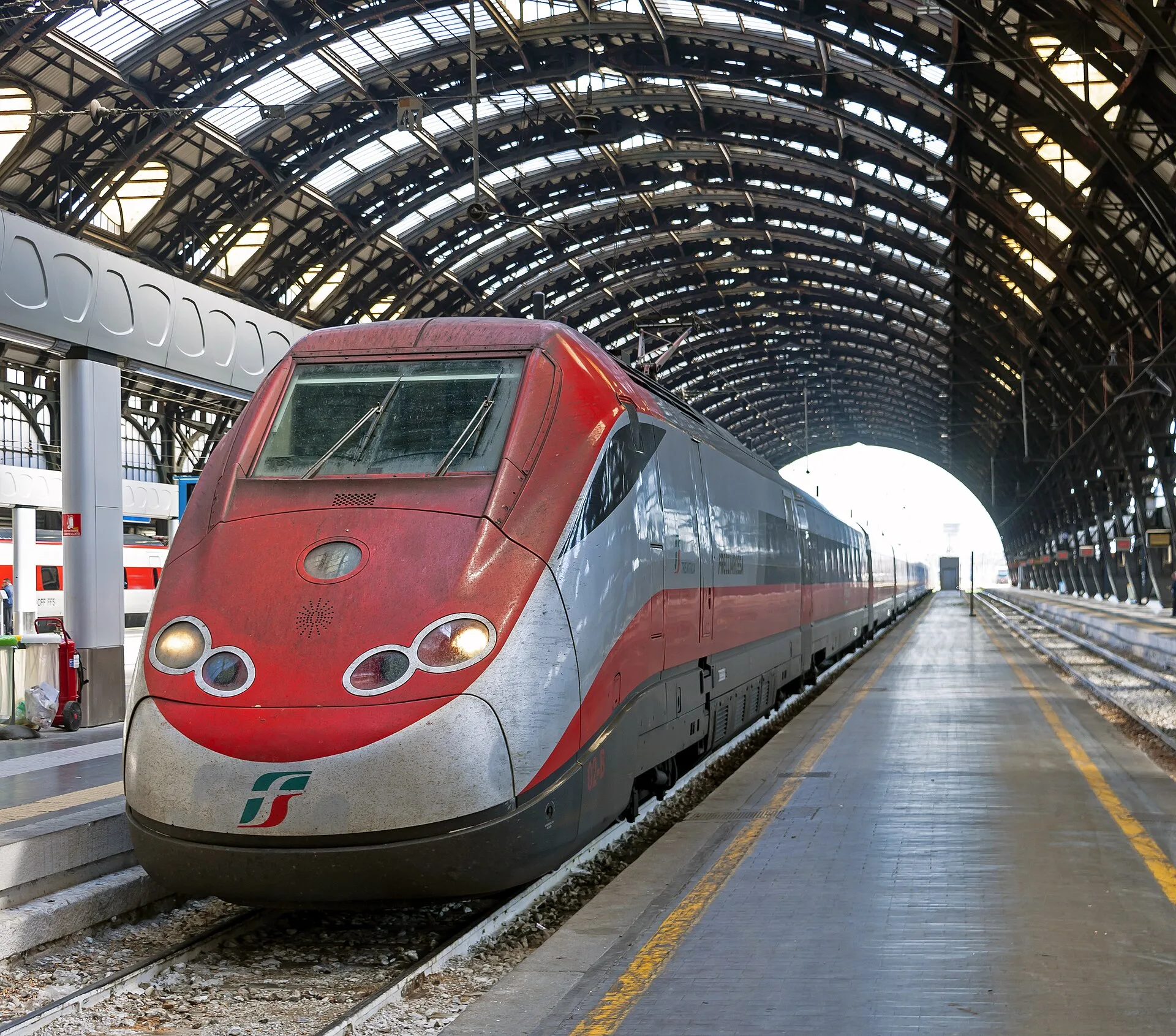
Route at a glance
See the journey before comparing the details
Key stops and sub-routes are planning structure, not a live timetable. Verify current service with the operator before travel.
- 01Rome
- 02Florence
- 03Bologna
- 04Venice
The short answer
Pick the option that fits the trip
Keep the city order linear. Treat fare restrictions as part of the itinerary design: the cheapest ticket is only the best ticket when your dates and departure times are truly fixed.
Best fit
- Use a linear Rome → Florence → Bologna → Venice sequence when all four cities belong in one northbound itinerary.
- Use flexible fares when travel dates or departure times may still move; use restrictive advance fares only when the itinerary is genuinely fixed.
Think twice if
- Avoid buying the cheapest fare category automatically if a missed or changed travel day would create a larger trip cost than the savings.
Key trade-offs
- High-speed rail makes the four-city sequence easy, but fare flexibility varies sharply by ticket type.
- Large luggage is generally allowed when safely stored, yet station movement and crowded trains still make bag size a practical constraint.
- Adding Bologna improves the food-and-city itinerary but creates another hotel change, so it should be a real stop rather than a token overnight.
Common mistakes
- Assuming every discounted Frecce fare has the same change or refund rules.
- Overpacking because there is no airline-style checked-bag process.
- Using short train times as a reason to move hotels too frequently.
Decision matrix
Match fare flexibility to trip certainty
This comparison intentionally avoids a numeric score. The useful answer depends on itinerary fit, not a universal ranking.
| Decision | Flexible fare | Restrictive advance fare |
|---|---|---|
| Best for | Plans still moving or high-stakes connections. | Locked itinerary and confident departure time. |
| Trade-off | Higher price for easier changes. | Lower price for tighter rules. |
| Missed-train risk | More recoverable depending on fare. | Can erase the savings quickly. |
| Planning behavior | Book earlier if desired, retain options. | Book only after trip order is stable. |
Decision 01
Use the railway to remove backtracking
Rome → Florence → Bologna → Venice is geographically clean and works well as a northbound first-timer sequence. Reverse it if the flight plan demands it; the principle is to avoid unnecessary returns rather than to worship one direction.
Decision 02
Fare rules matter more than operator branding
Trenitalia publishes materially different conditions across Base, Economy, and Super Economy style fares. Change and refund rights are therefore part of the purchase, not a minor afterthought.
Italo adds competition on many core high-speed city pairs, so compare the exact train, station, and fare conditions rather than assuming one operator is always better.
Decision 03
Short train times can create too many hotel changes
High-speed rail makes the cities feel close, but every hotel move still requires checkout, luggage handling, station time, and check-in. Bologna should earn its place as a destination rather than being added simply because the train ride is short.
Decision 04
Luggage is permissive but still physical
Trenitalia generally allows luggage free of charge when it can be safely stored and does not obstruct people or operations. That is not the same as saying very large bags are convenient through Rome, Florence, Bologna, and Venice stations.
Before you book
Check the details that can change
Use the operator links below for current rules, schedules, prices, and availability for your journey.
Fare conditions
Trenitalia currently publishes different change and refund conditions by Frecce fare family; confirm the exact fare before purchase.
Verify with Trenitalia Le Frecce fare informationLuggage
Trenitalia states that luggage can generally be carried free when safely stored without obstruction; practical station handling remains the traveler’s responsibility.
Verify with Trenitalia FAQBuild the trip
A sensible planning sequence
- Keep the route linear and allocate nights according to what you want to do in each city, not according to the short train times.
- Buy restrictive fares only after hotels and the trip order are stable; preserve flexibility on the legs most exposed to flight or event changes.
Continue planning
Related decision guides
Use the next guide only when it solves an adjacent decision in the same trip.