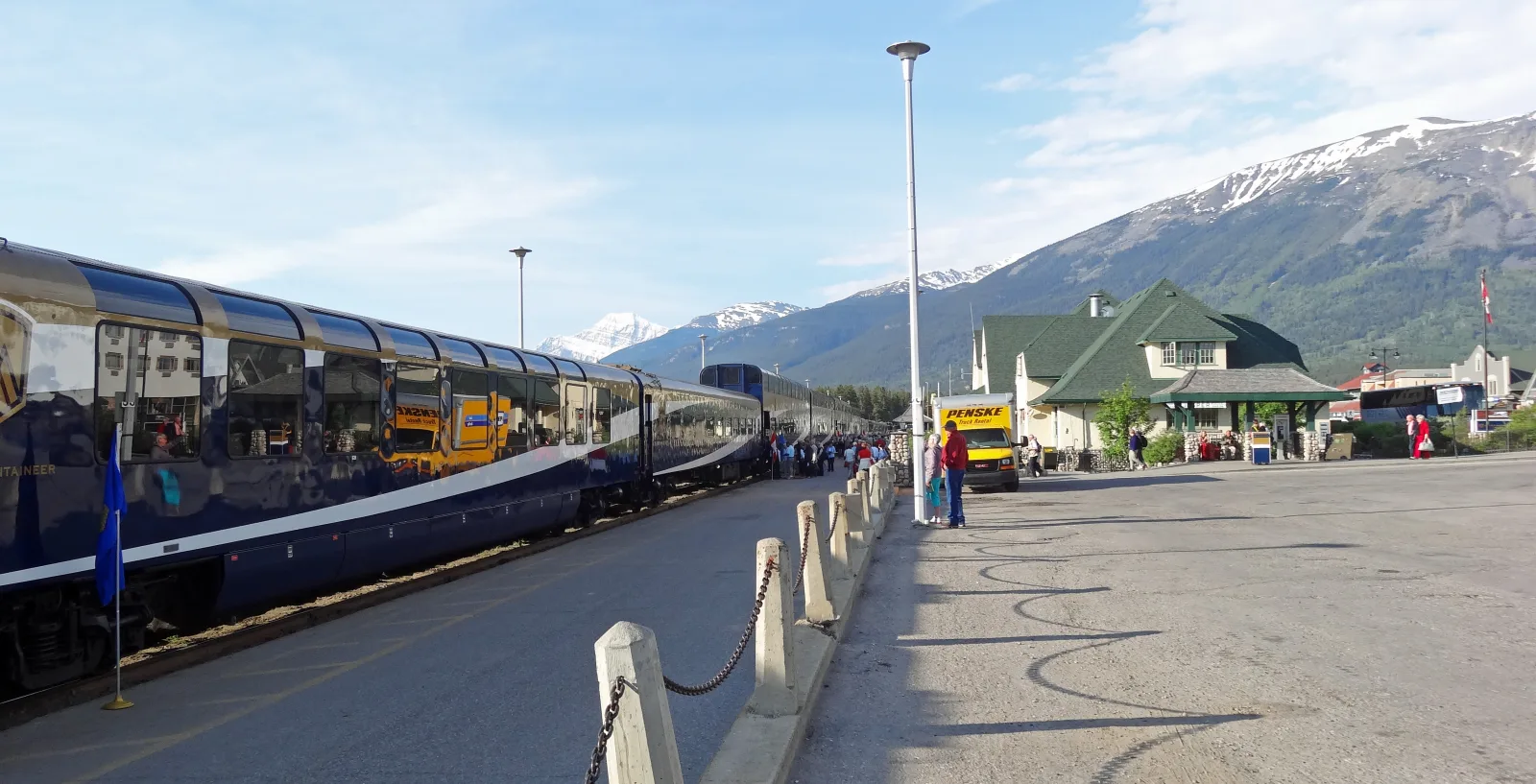
Route at a glance
See the journey before comparing the details
Key stops and sub-routes are planning structure, not a live timetable. Verify current service with the operator before travel.
- 01Vancouver
- 02Kamloops
- 03Jasper
- 04Banff / Lake Louise
The short answer
Pick the option that fits the trip
Use VIA Rail when Jasper and an overnight long-distance train fit the trip. Use Rocky Mountaineer when a premium daylight rail experience is the objective. Use rail plus road when Banff, Lake Louise, Jasper, and the Icefields Parkway need flexible access.
Best fit
- Choose VIA Rail when the overnight long-distance train itself is part of the appeal and Jasper fits the route.
- Choose Rocky Mountaineer when daylight sightseeing, hosted service, and a packaged premium rail experience justify the higher spend.
- Choose rail plus road when Banff, Lake Louise, the Icefields Parkway, and schedule control matter more than staying on trains.
Think twice if
- Avoid comparing the three options only by ticket price: they provide different combinations of transport, lodging, daylight, and access.
Key trade-offs
- VIA Rail is public intercity transport with sleeper options; Rocky Mountaineer is a premium daylight tourism product.
- VIA naturally serves Jasper, while Banff access generally requires a road segment; Rocky Mountaineer offers routes and packages built around Jasper or Banff/Lake Louise.
- A road segment adds driving or coach logistics but gives the strongest control over national-park stops and the Icefields Parkway.
Common mistakes
- Assuming Rocky Mountaineer and VIA Rail are interchangeable ways to reach the same mountain towns.
- Booking rail before deciding how Banff, Lake Louise, Jasper, and the Icefields Parkway will connect.
- Treating a published fare or package price as evergreen instead of rechecking the selected date and service level.
Decision matrix
Compare three different Rockies trip models
This comparison intentionally avoids a numeric score. The useful answer depends on itinerary fit, not a universal ranking.
| Decision | VIA Rail | Rocky Mountaineer | Rail + road |
|---|---|---|---|
| Core product | Public long-distance intercity train. | Premium daylight tourism rail journey. | Transport mix built around park access. |
| Natural Rockies anchor | Jasper. | Jasper or Banff/Lake Louise depending on route/package. | Any combination the road plan supports. |
| Night strategy | Sleeper options on the train. | Hotel overnight between rail days, including Kamloops on core routes. | Hotels chosen independently. |
| Best for | Travelers who value the overnight train itself. | Travelers prioritizing daylight scenery and hosted service. | Travelers prioritizing park stops and schedule control. |
Decision 01
VIA Rail is transportation first, experience second
VIA Rail’s Canadian connects Toronto and Vancouver through Jasper. For a Rockies-focused trip, Jasper is the key geographic fact; check the available cabins and actual journey length for your chosen segment.
The strongest case for VIA is not that it duplicates a luxury sightseeing train for less. It is that an overnight national rail journey can replace hotel nights while remaining a meaningful travel experience in its own right.
Decision 02
Rocky Mountaineer is designed around daylight
Rocky Mountaineer is built around hosted daylight sightseeing with hotel nights between rail days. Compare the route that serves the places you actually want to visit, rather than assuming every package follows the same mountain corridor.
That makes the product easier to justify for travelers who want the rail portion to be a curated sightseeing experience rather than simply a way to move between cities.
Decision 03
Banff changes the transport equation
VIA Rail does not run to Banff. If Banff and Lake Louise are essential, a road connection is part of the trip whether it is self-drive, coach, transfer, or a packaged itinerary. The Icefields Parkway between Banff/Lake Louise and Jasper is also fundamentally a road experience.
For many travelers the best Rockies itinerary is therefore hybrid rather than ideological: use rail where rail adds experience, then use road where the landscape and park geography demand it.
Decision 04
Compare total trip shape, not headline fare
A fair comparison includes hotel nights, meals or inclusions, road transfers, service class, daylight, and how many vacation days each option consumes. Published fares and packages are date-sensitive, so use them only after the itinerary model is chosen.
Before you book
Check the details that can change
Use the operator links below for current rules, schedules, prices, and availability for your journey.
VIA Rail service
Confirm the chosen segment, accommodation, departure and arrival details directly with VIA Rail.
Verify with VIA Rail The CanadianRocky Mountaineer routes
Compare current routes, hotel nights and inclusions for the actual departure before booking.
Verify with Rocky Mountaineer routesBuild the trip
A sensible planning sequence
- Decide first whether Jasper, Banff/Lake Louise, or both are essential; that choice determines which rail product has geographic logic.
- Then compare daylight, onboard nights, road transfers, hotel nights, and total trip length rather than comparing rail fares in isolation.
Continue planning
Related decision guides
Use the next guide only when it solves an adjacent decision in the same trip.